Friday, 25 November 2011

Victoria's Sectet Beauty Shots

Victoria's Secret Beauty Shots - Shoot 6 Research

I decided to look at a small selection of Beauty Photographs, to gain inspiration for my own Studio Photographs. I very much like the manipulation on these 6 images. They are quite heavily manipulated which is a contrast to how I tend work on my own photographs - however I’d love to work differently using different inspired styles and techniques. In particular I very much like the colours in the photographs below, which is something I'm keen to experiment with.  


DOUTZEN KROES, AIDRIANA LIMA, CANDICE SWANEPOEL


Richard Avedon


Richard Avedon
was an 
American photographer. Throughout his career Avedon has maintained a unique style all his own. Famous for their minimalism, Avedon portraits are often well lit and in front of white backdrops. Often containing only a portion of the person being photographed, the images seem intimate in their imperfection. While many photographers are interested in either catching a moment in time or preparing a formal image, Avedon has found a way to do both.

Shoot 5 - Fay no.2 Final Photographs


Shoot 5 - Fay No.2

'What do I want to capture most in my photographs? Human emotion and the essence of human being. I am less interested in forcing my subjects into a visually interesting form or putting them against an unusual background.’ - Philippe Halsman
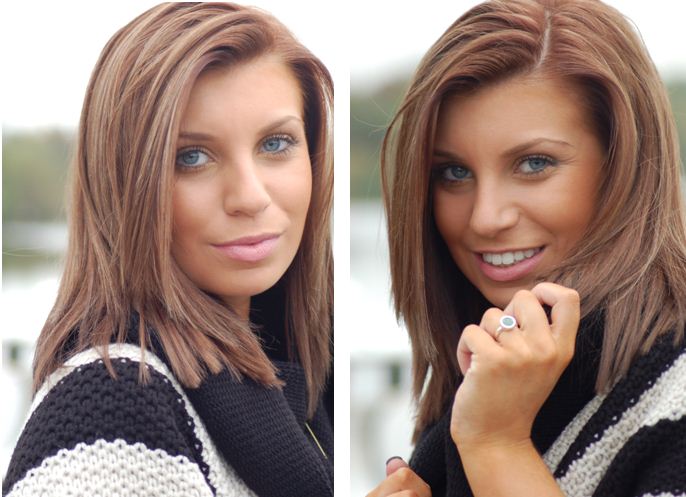
To develop my assignment further I have decided to photograph my friend Fay again as I feel the last shoot was successful resulting in some good images as Fay seemed immediately at ease and comfortable with the process, she was confident, comfortable and enjoyed the process and this came across in the images which communicated so perfectly the focus of the image taken – Personality and Fay’s confidence, self assurance, outgoing side, joy, care freeness, happiness – all key features of her personality, came through in the final outcome. Fay is uncomplicated and very natural and open; this also came across in the photographs. When I capture Fay and when she laughs the photographs become completely unconstructed. I barely needed to work on the last series of photographs I took of her.
I intend to go to Dunham Park to photograph Fay, Dunham Park is a lovely setting with plenty of opportunity to photograph. The open space and trees create such a lovely scene the potential to get a good photograph is endless.

Sunday, 9 October 2011

Photographs


David Bailey Photography

David Bailey is a British photographer born in 1938. In the late 50’s he became a photographic assistant at the John French studio, and in May 1960, he was a photographer for John Cole's Studio Five before being contracted as a fashion photographer for British Vogue magazine later that year. Along with Terence Donovan and Brian Duffy, he captured and helped create the 'Swinging London' of the 1960s: a culture of high fashion and celebrity chic. The three photographers socialised with actors, musicians and royalty, and found themselves elevated to celebrity status. Together, they were the first real celebrity photographers. Wikipedia


I very much like the photography taken by David Bailey and feel it to be very influential. The model is posing, and the photograph is heavily constructed. The model appears to be very confident in front of the camera just my friend Fay is. In particular I like the composition of the photograph, the model fills the frame from head to waist yet as a view I personally am drawn to her face.

August Sander

August Sander was a German portrait and documentary photographer. Sander's first book Face of our Time was published in 1929. Sander has been described as "the most important German portrait photographer of the early twentieth century. During military service, August Sander was an assistant in a photographic studio in Trier; he then spent the following two years working in various studios elsewhere. By 1904 he had opened his own studio in Linz, Austria, where he met with success. He moved to a suburb of Cologne in 1909 and soon began to photograph the rural farmers nearby. Around three years later Sander abandoned his urban studio in favour of photographing in the field, finding subjects along the roads he travelled by bicycle. Man of the Twentieth Century" was Sander's monumental, lifelong photographic project to document the people of his native Westerwald, near Cologne, stating that we know that people are formed by the light and air, by their inherited traits, and their actions. We can tell from appearance the work someone does or does not do; we can read in his face whether he is happy or troubled," Sander photographed subjects from all walks of life and created a typological catalogue of more than six hundred photographs of the German people. Although the Nazis banned the portraits in the 1930s because the subjects did not adhere to the ideal Aryan type, Sander continued to make photographs. After 1934 his work turned increasingly to nature and architectural studies. - Wikipedia


August Sander’s work I find both influential and inspirational. Without being over constructed, over manipulated or in general just over the top he manages to photograph the natural human face as a portrait. His photographic collection is very effective and powerful and really makes you look and question the photograph. Whilst looking through August Sander’s work I noticed that a lot of his portraits although the subject is posed they show truth and realistically he is documenting the area and people surrounding him. I especially like the above photograph as it shows masculinity in its own right, I want to take all of my inspirations and interpret them using similar techniques when photographing Joe.